




As winter approaches, many northern snowbirds are getting a jump on planning their escape to warmer places. Far down the list—indeed, often barely considered—is the choice of sunscreen. But treating sun protection as an afterthought could be a deadly mistake. About one in five Americans develops skin cancer, the most common form of the disease, during their lifetime, and sunbathing is a major contributor. Melanoma, the most serious skin cancer, can seriously disfigure or kill.
For decades, many American sunscreens offered uneven protection: While they adequately protected against sunburn, they were far less effective in blocking the deeper-penetrating rays that also contribute to skin cancer. The Food and Drug Administration repeatedly withheld clearance for additional sunscreen ingredients that would do just that, claiming they needed more safety data. The rest of the world was not so reticent. For more than two decades, consumers in Europe Australia and Asia sunseekers had a broader and more protective range of advanced products to choose from.
Finally, that's begun to change.
In June, the FDA cleared bemotrizinol (BEMT)—the first approved active sunscreen ingredient since the late 1990s. BEMT provides broad protection against ultraviolet radiation, remains stable in sunlight, and has minimal systemic absorption. Neutrogena rolled out two BEMT sunscreens, SPF 60 and SPF 70 in September. Last month, La Roche-Posay introduced a SPF 50 sunscreen.
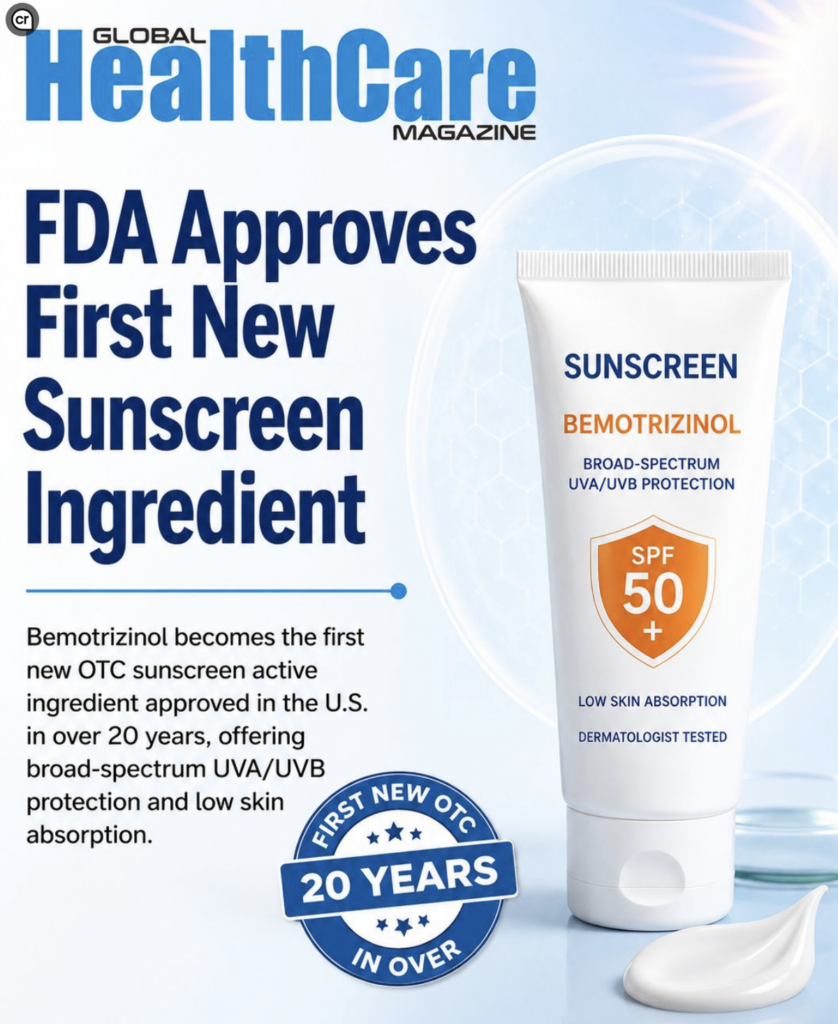
Why did the FDA wait so long to approve BEMT?
It's s fair to ask. Did regulators adequately weigh the risks of withholding a product already shown to be safe and effective? What has its long exclusion from the American market cost—in lives and health care spending?
The American Cancer Society estimates that about 112,000 invasive melanomas will be diagnosed in 2026 and about 8,510 Americans will die from the disease. While melanoma represents only a small fraction of skin cancers, it accounts for most skin-cancer deaths. Melanoma mortality has fallen substantially in recent years, largely because of advances in treatment. But the high incidence remains a serious problem, particularly among older Americans. And basal-cell and squamous-cell carcinomas, although much less likely to be fatal, impose an enormous burden in the form of biopsies, excisions, Mohs surgery, expense, scarring, and anxiety.
The villain is ultraviolet (UV) radiation. There are two principal ultraviolet bands of concern. UVB is particularly important in sunburn and direct DNA damage. UVA penetrates more deeply into the skin, contributes heavily to photoaging and can cause skin cancer.
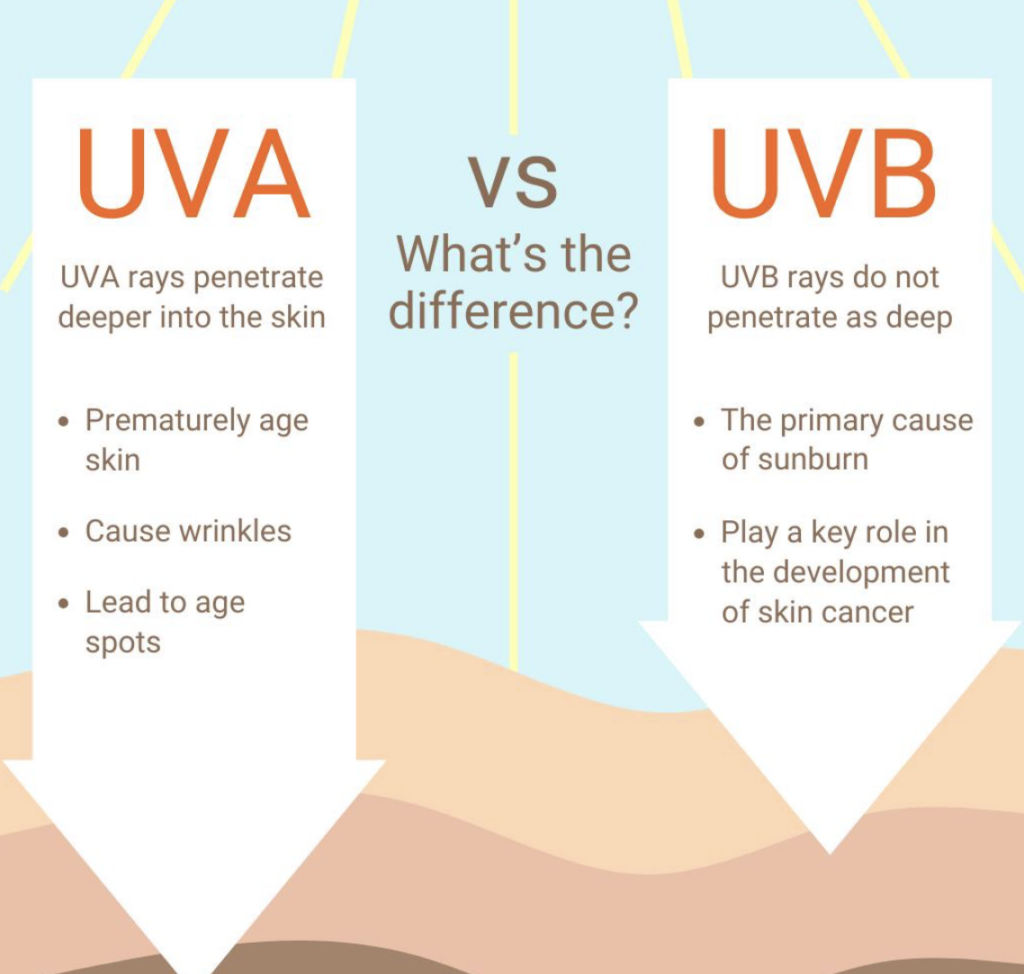
That distinction matters when choosing sunscreen. For decades, sunscreen marketers emphasized the products' sun protection factor, or SPF. Most people assumed that the higher the SPF, the greater the protection against skin cancer. Sun worshippers paid more for high SPF, often multiple times more, believing that they were adequately protected against skin cancer.
But SPF alone doesn't tell the whole story. The SPF rating measures protection against sunburn, but not how well a sunscreen blocks deeper-penetrating UVA rays, which can cause cancer even absent a sunburn.
Existing American broad-spectrum sunscreens do provide UVA protection, particularly formulations containing zinc oxide or properly stabilized avobenzone. As long ago as 2016, a JAMA Dermatology commentary pointed out that advanced sunscreen filters such as Tinosorb S, Tinosorb M, and Mexoryl XLproducts had already been available in Europe for more than a decade while the FDA was still considering whether to permit their use in sunscreens sold in America.
Ten years later, FDA has finally admitted one of them.
Mis- and disinformation are distorting science and public policy. Subscribe to our Daily and Weekly Digests for incisive coverage of 'disruptive' innovations in AI, agricultural biotechnology, food, chemicals, nuclear energy, vaccines, and other disruptive innovations.
Significant advance
BEMT is especially attractive because it is highly photostable, unlike avobenzone, which tends to degrade in sunlight and requires careful formulation. It is also a relatively large, oil-soluble molecule that penetrates the skin poorly. FDA's extensive review concluded that BEMT, at concentrations up to 6 percent and under specified conditions, is "generally recognized as safe and effective."
There is good evidence that regular sunscreen use makes a difference. In a landmark randomized trial involving 1,621 Australian adults, participants assigned to daily sunscreen use subsequently developed about half as many melanomas as those assigned to discretionary use—11 versus 22—although the overall result narrowly missed conventional statistical significance. The reduction in invasive melanomas was statistically significant: three cases in the daily-use group versus 11 among controls.
A related randomized trial found that daily sunscreen use also slowed visible skin aging, the wrinkles and spots that Americans spend billions trying to undo later.
Why is the US behind?
What took American regulators so long to approve BEMT? The answer is a classic case of regulatory good intentions producing perverse results.
In the United States, sunscreens are regulated as over-the counter (OTC) drugs. In much of the rest of the world, they are regulated less stringently, more like cosmetics. The US approach is not inherently unreasonable: Sunscreens make health claims, so requiring evidence of safety and effectiveness makes sense.
Related on the SLP
 Summer is coming: Just how much sun can your DNA take before being damaged?
 Skin cancer and screening: The good and the bad of 'overdiagnosis'
For decades, FDA used its notoriously cumbersome process for setting standards for nonprescription drugs. Updating these standards could require conventional notice-and-comment rulemaking, a process spectacularly ill-suited to keeping pace with advances in chemistry.
Congress recognized the problem: The Sunscreen Innovation Act of 2014 was supposed to provide an alternative pathway for reviewing sunscreen ingredients already marketed abroad. But the logjam persisted.
Congress tried again in 2020. The Coronavirus Aid, Relief, and Economic Security (CARES) Act replaced the ponderous rulemaking system with a more direct review process. It also established a user-fee program to provide FDA with resources and performance deadlines. The CARES Act reduced procedural obstacles to updating OTC drug standards while retaining scientific review and public participation, but it did not fully eliminate the "regulatory sludge."
The old system's delays were consequential and sometimes cut against public safety: FDA reported that adding liver-injury warnings for acetaminophen and gastrointestinal-bleeding warnings for nonsteroidal anti-inflammatory drugs took approximately seven years, despite their high priority. The reform targets such procedural delay but does not remove the need for adequate safety and effectiveness evidence.
BEMT is the most visible dividend of that reform.
This history illustrates the absurdity of the old regime. In its regulatory submissions, DSM-Firmenich, the manufacturer of BEMT, noted that the product has been commercially available since 2000 following European approval at concentrations as high as 10 percent. Yet American regulators required a large additional package of evidence before permitting it at concentrations up to 6 percent.
Certainly, foreign approval should not automatically compel FDA approval. Foreign regulators can make mistakes, and widespread foreign use is not a substitute for sound toxicology. But two decades of real-world human exposure in countries with sophisticated regulatory systems is evidence. Regulators should take account of it intelligently instead of behaving as though a molecule crossing the Atlantic loses its scientific history of safety at US Customs.
Not enough
The danger now is that FDA and its political overseers will treat BEMT as "mission accomplished." It isn't.
Other modern UV filters remain unavailable for routine sunscreen formulation in the United States, even though some have long histories of use overseas. American sunscreen manufacturers should have access to a wider range of well-studied filters so they can combine compounds that protect against different portions of the ultraviolet spectrum, improve photostability, and make products more pleasing to consumers.
Once DSM-Firmenich—the manufacturer seeking FDA approval for BEMT—submitted its request through the reformed pathway, FDA moved relatively briskly. The system can work. The question is whether it can work reliably and repeatedly.
Risk reduction, not perfection
There is a larger lesson here. Regulators naturally concentrate on the risks of approving something. If FDA permits a new sunscreen ingredient and an unexpected adverse effect appears, the agency will be blamed.
The harms of delay, by contrast, are largely invisible. Nobody can identify the individual whose melanoma might have been prevented had better UVA filters been available 10 years earlier. Nobody knows which squamous-cell carcinoma would not have required surgery, or which consumer might have worn sunscreen every day if it had not felt greasy or left a white residue.
But invisible costs are still costs.
Good regulation must compare the risks of action with the risks of inaction. With sunscreens, the latter include decades of unnecessary exposure to UV radiation and preventable cancers while superior technology remained stranded outside the US market. FDA should make much greater use of foreign regulatory decisions, postmarket experience, and modern toxicological methods, and should impose additional US-specific testing only when there is a scientifically persuasive reason for it.
Ultraviolet radiation travels from the sun at the speed of light. Sunscreen innovation should not move at the usual speed of the federal bureaucracy. Taking roughly a quarter-century to give Americans access to a widely used, well-studied ingredient that can help prevent cancer is nothing to celebrate.
Henry I. Miller, a physician and molecular biologist, is the Glenn Swogger Distinguished Scholar at the Science Literacy Project. A veteran of the NIH and FDA, he was the founding director of the FDA's Office of Biotechnology. Find Henry on X @henryimiller